
Forest Lake Garage Door Guide
Weather Seals and Draughts on Forest Lake Garage Doors
Forest Lake homes built 1950-2002 face cold-severe winters that wreck old weatherstripping. Here's what to check, what's normal, and when a seal job isn't enough.
- Licensed & Insured
- Same-Area Service Calls
- Upfront Pricing
What to Check
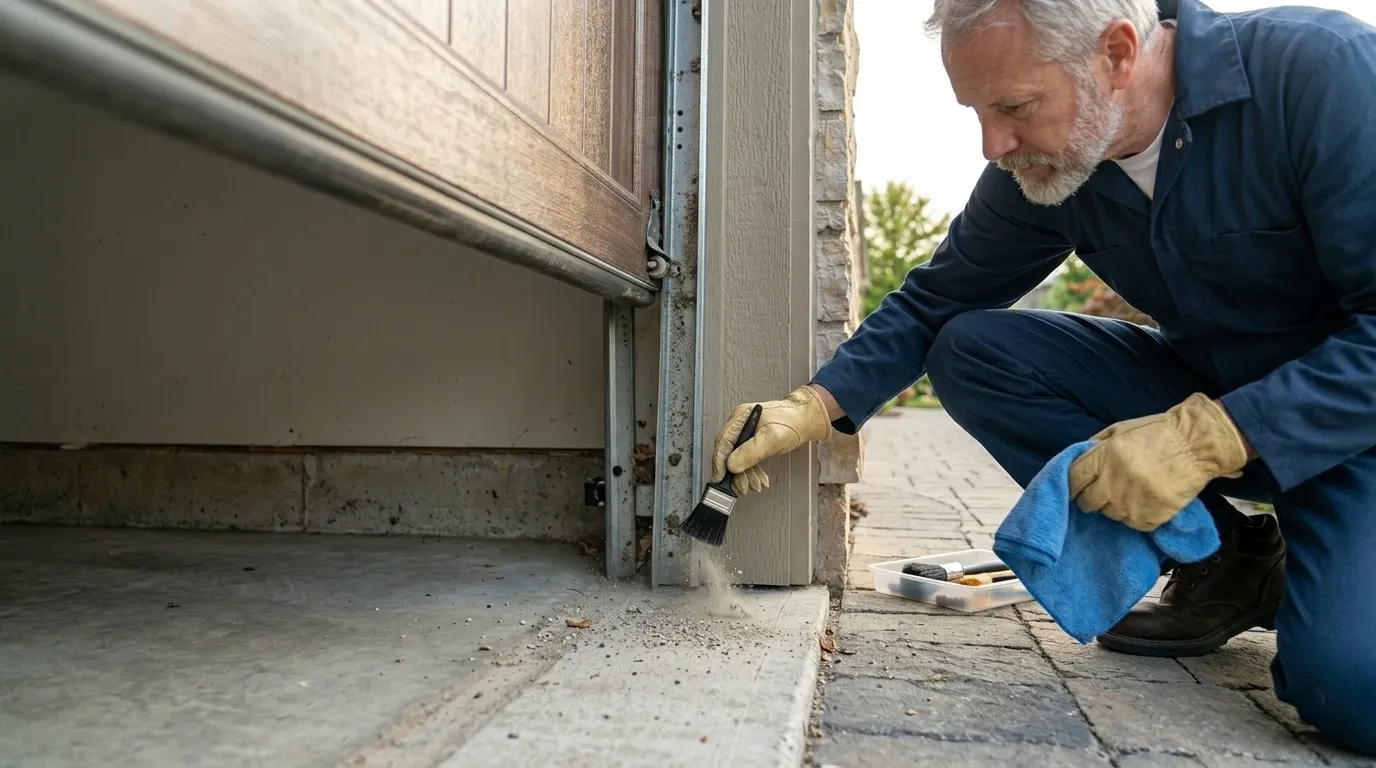
Start at the bottom of the door. The rubber astragal - the seal that runs the width of the panel and meets the floor - is the first thing cold air finds. Press a hand along it on a windy day.
If you feel air moving anywhere along that run, the seal has either shrunk, cracked, or pulled loose from its track. Next check the side seals where the door meets the jamb; these flatten out over the years and stop making real contact once the vinyl hardens. Look at the threshold too, especially if the slab has settled even slightly - a quarter-inch gap under a door is enough to let snow blow in during a hard wind.
Finally check the weatherstripping around the top panel where it meets the header. Most owners never look up there, and it's often the first place to go because sun and cold both hit it. None of this requires tools, just a flashlight and a few minutes standing in your own garage on a cold morning.
The Situation
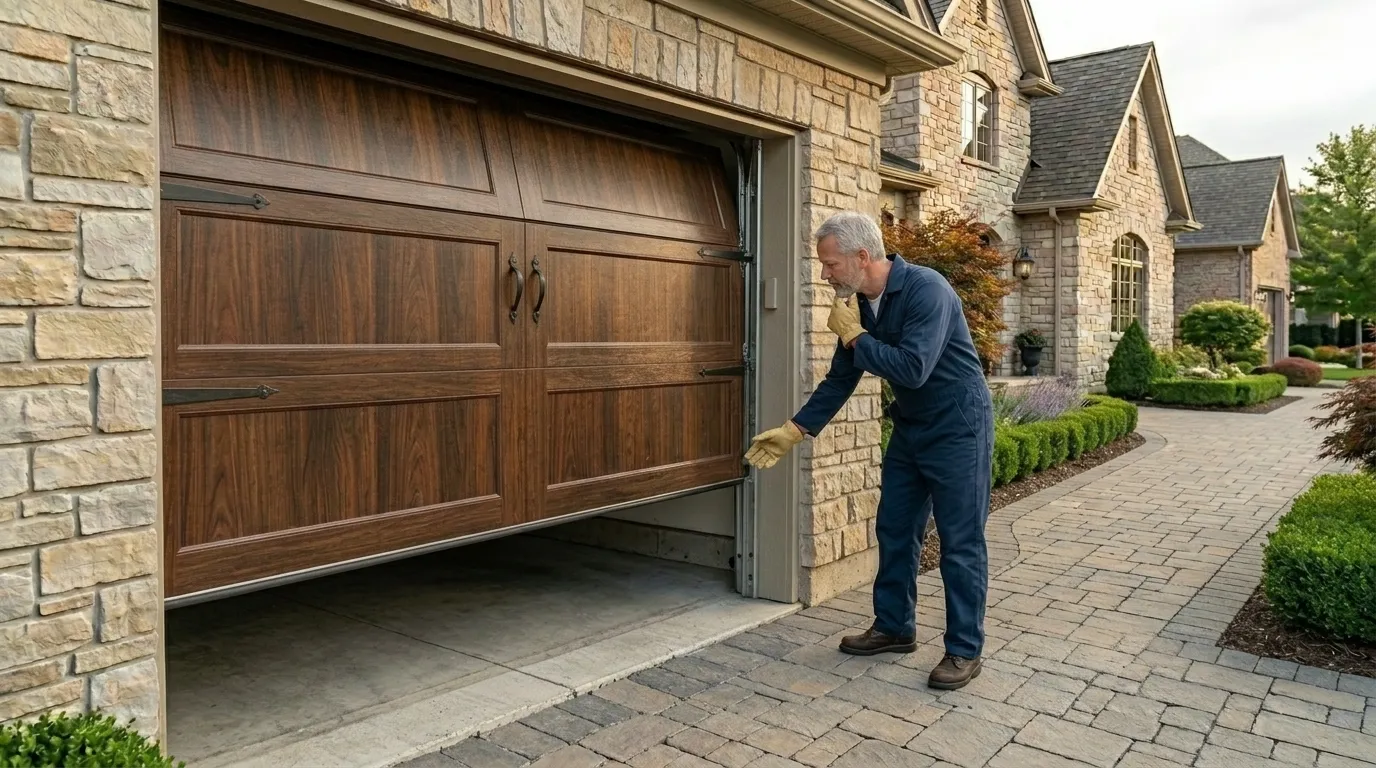
Housing across this service area was mostly built between 1950 and 2002, with the median landing around 1984. That means a large share of the doors and seals still in service were installed, or last replaced, sometime in the 1980s or 90s - the era before foam-core panels and better bottom-seal retainer systems became standard. Vinyl and rubber compounds from that period were not engineered for the number of freeze-thaw cycles they've now been through.
A seal that looked fine in October can be brittle and cracked by February, simply from age plus cold, not from any single failure. This isn't a defect in your door. It's what happens to a thirty- or forty-year-old seal in a climate that swings hard every winter.
The panel itself is often still sound; it's the strip of rubber doing the sealing that's given up.
When to Get Help
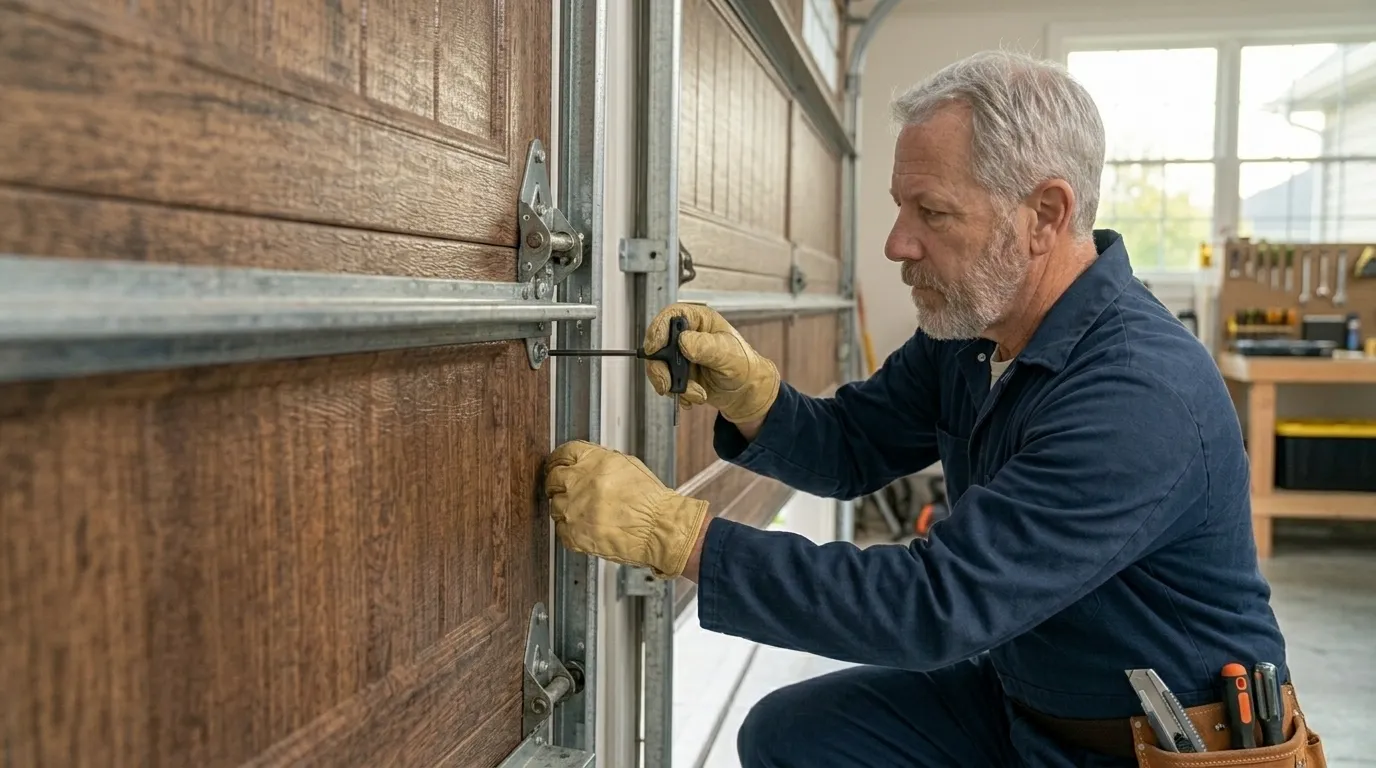
A seal replacement is a straightforward job and usually the right call before you consider anything bigger. Call if you're seeing daylight along the bottom of a closed door, if snow or leaves are working their way in along the sides, or if the door feels noticeably colder inside the garage than it used to. Also worth a call: if the seal has already been replaced once and the draught is back within a year or two, because that usually points to a track or threshold problem rather than the rubber itself.
One honest limitation - if the door panel has warped or the bottom section is rusted through, a new seal won't fix the draught. At that point you're looking at panel or door replacement, and we'll tell you that straight rather than sell you a seal that won't hold.
What Local Conditions Do
This area sits in a cold-severe climate band, and that matters more for seals than for almost any other part of the door. Repeated freeze-thaw cycles are harder on rubber and vinyl than steady cold ever would be - the material contracts hard in a deep freeze, then swells slightly as temperatures climb back near freezing, and that flexing is what eventually splits a seal that looked fine the winter before.
Ice buildup along the bottom track is common here too, and it can pin a seal against concrete overnight, tearing it when the door opens in the morning. None of this is unique to any one house; it's what the climate does to any door in this part of the state, regardless of brand or age, though older seals from the 1980s-90s stock common here show it first.
How We Can Help
Garage Door Repair
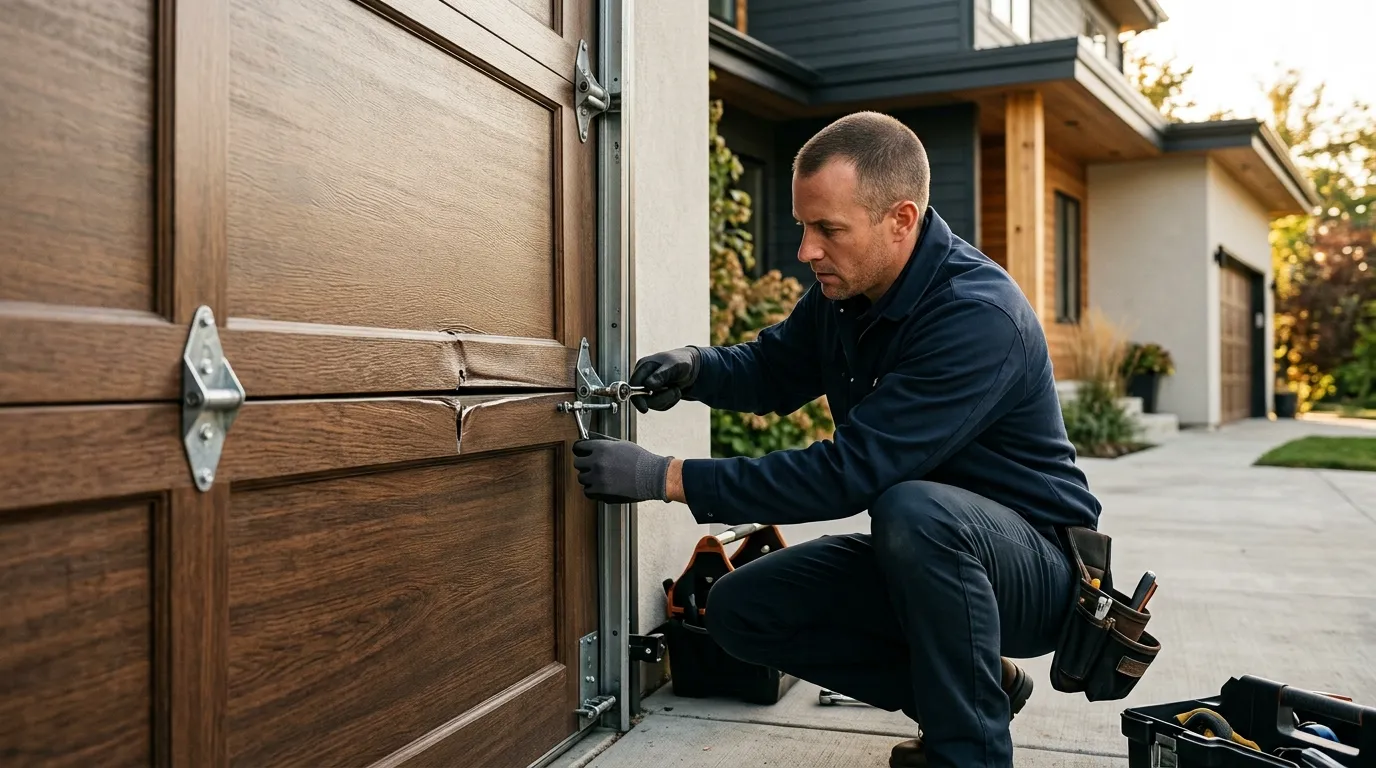
Springs, cables, tracks, rollers, and openers fixed by a tech who explains the problem before touching anything.
Learn more →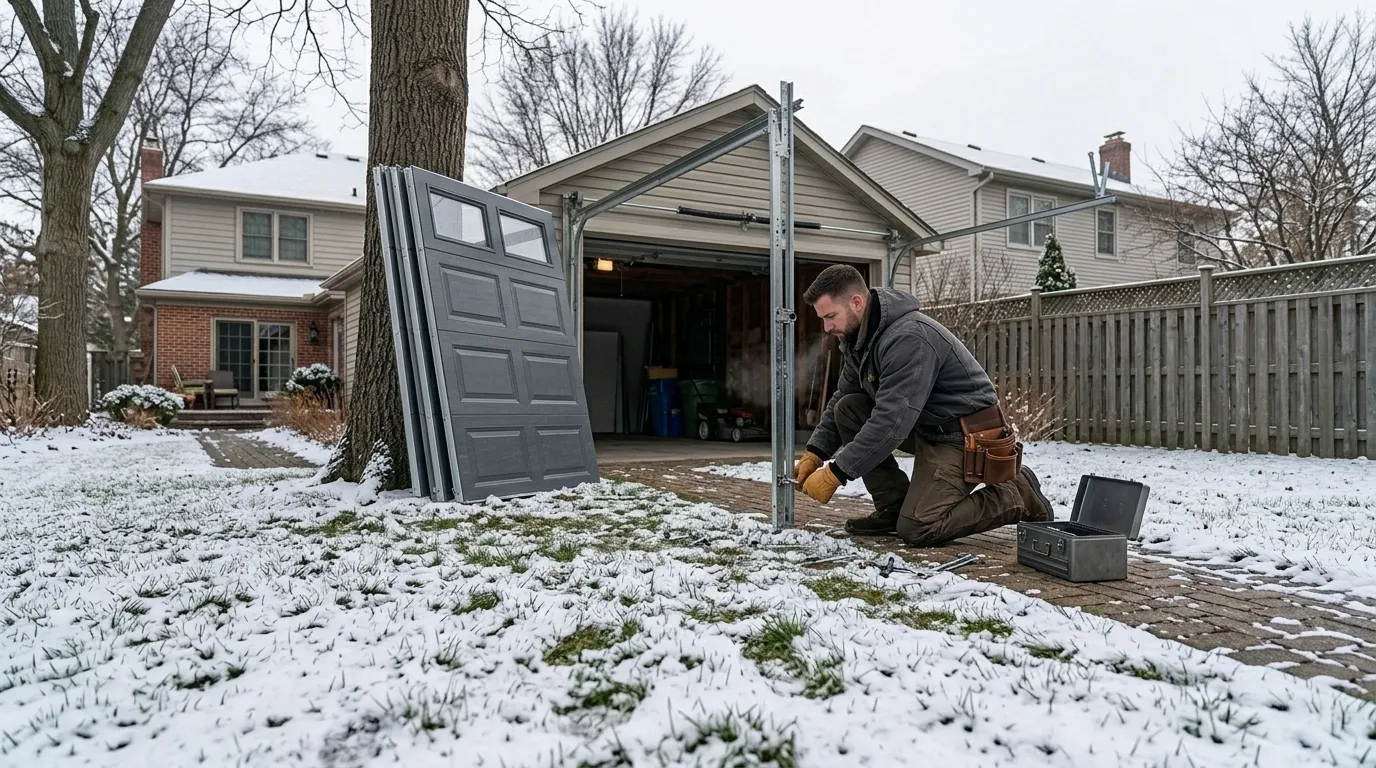
Garage Door Installation
New sectional doors sized and installed for the housing stock actually built in this area.
Learn more →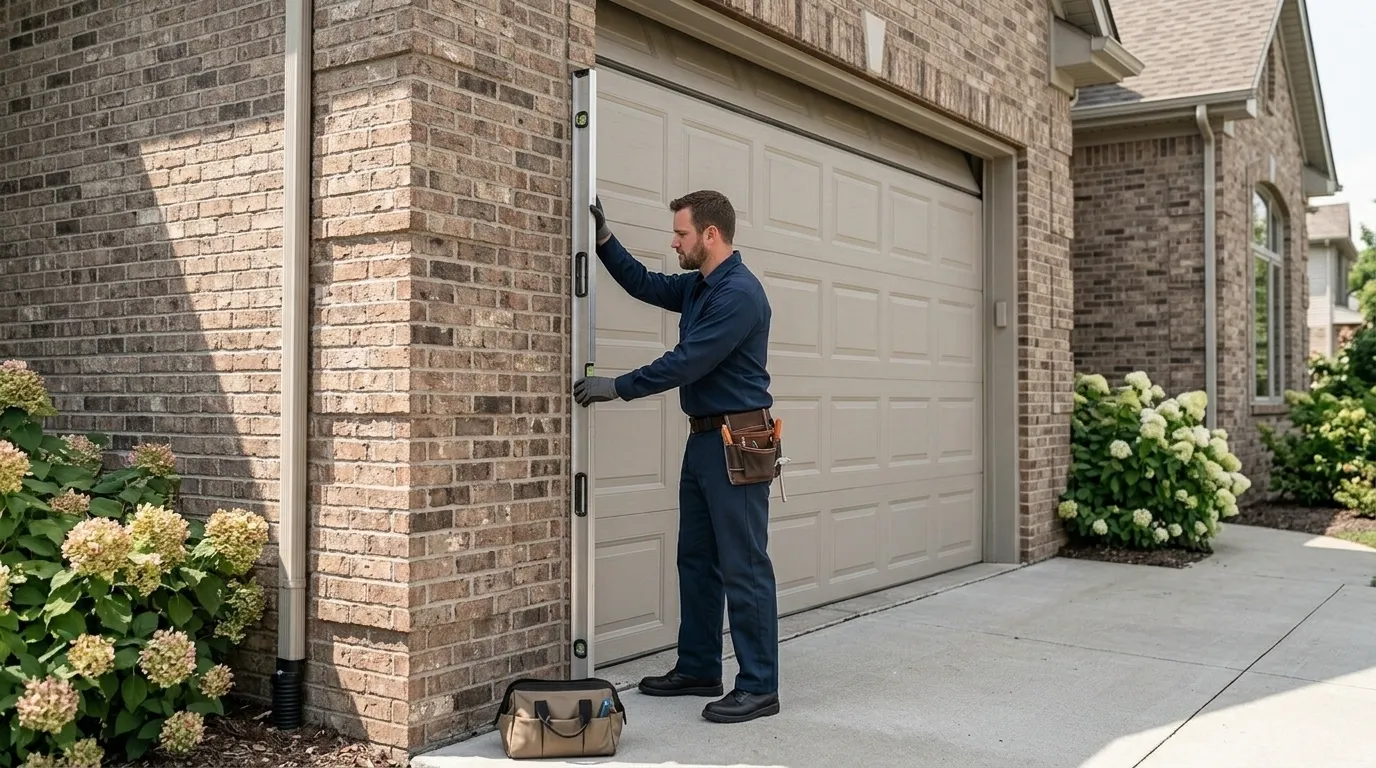
Garage Door Service
Tune-ups, lubrication, and safety checks that catch a small problem before it becomes a service call.
Learn more →Frequently Asked Questions
Why is my garage door letting in cold air even though it looks fine?
Most draughts come from the bottom seal or side weatherstripping losing flexibility with age, not from a visible crack. Rubber installed in the 1980s or 90s, common in homes across this area, hardens with repeated freeze-thaw cycles and stops sealing tight even when it looks intact. A hand check along the seal on a cold day usually finds it.
How often should weather seals be replaced in a cold climate like this?
There's no fixed schedule in the facts we work from, but seals from the 1980s-90s era common in this area's housing stock are well past their practical life and worth checking every fall. If you feel air movement along the bottom or sides, replace rather than wait.
Does a new seal fix ice buildup under the door?
Sometimes, but not always. If ice is forming because the seal is cracked, replacing it helps. If the slab has settled or the threshold is uneven, a new seal alone won't stop water pooling and refreezing under the door - that needs a threshold fix too.
Do you work outside Forest Lake itself?
Yes, we cover the surrounding towns as well, including Wyoming, Scandia, Columbus, Chisago City, and Centerville, all within about seven miles, along with the wider ring of communities out to Stacy and North Branch.
Have a Door That Needs a Second Opinion?
Call and describe what it is doing - we will tell you what it likely is.