Service
Garage Door Maintenance for Forest Lake's Cold-Climate Housing Stock
Forest Lake homes date mostly to 1950-2002 in a severe cold climate that hardens grease and snaps springs. What fails, why, and what a tune-up covers.
- Licensed & Insured
- Same-Area Service Calls
- Upfront Pricing
What Happens When You Call
-
1
Call or Request a Quote
Tell us what the door is doing and roughly how old the house is - that alone points us toward the likely part before a truck leaves.
-
2
On-Site Diagnosis
A tech checks the spring, cables, tracks, and opener in person and tells you plainly what is actually wrong.
-
3
Straight Price, No Surprises
You get a number before any work starts. It covers parts and labor, nothing added after the fact.
-
4
Fixed the Same Visit
Most repairs are done in one trip. If a part needs sourcing, we tell you that upfront instead of guessing.
What Can Go Wrong
Most houses across this service area went up between 1950 and 2002, with the median build year sitting around 1984. That means a lot of doors still running on the torsion springs, hinges, and roller hardware that came with the house - nobody's swapped them out because nothing's failed yet, until it does. The usual list: a torsion spring loses tension and the door gets heavy on one side, hinges wear oval and let panels rack, rollers dry out and start grinding in the track, and the opener's force setting drifts so it either stalls halfway or slams down too hard.
None of that is exotic. It's just wear, accelerated by age and by a climate that's rough on lubricant and metal fatigue alike. A door that's fine in September can bind or refuse to open on the first hard-freeze morning of the year, because cold stiffens the grease in bearings and shrinks steel just enough to change how a marginal spring or a worn hinge behaves.
Left alone, a small issue like a squealing roller usually turns into a cable off the drum or a spring that snaps under load - often on the coldest morning of the week, when you need the door most.
What the Fix Involves
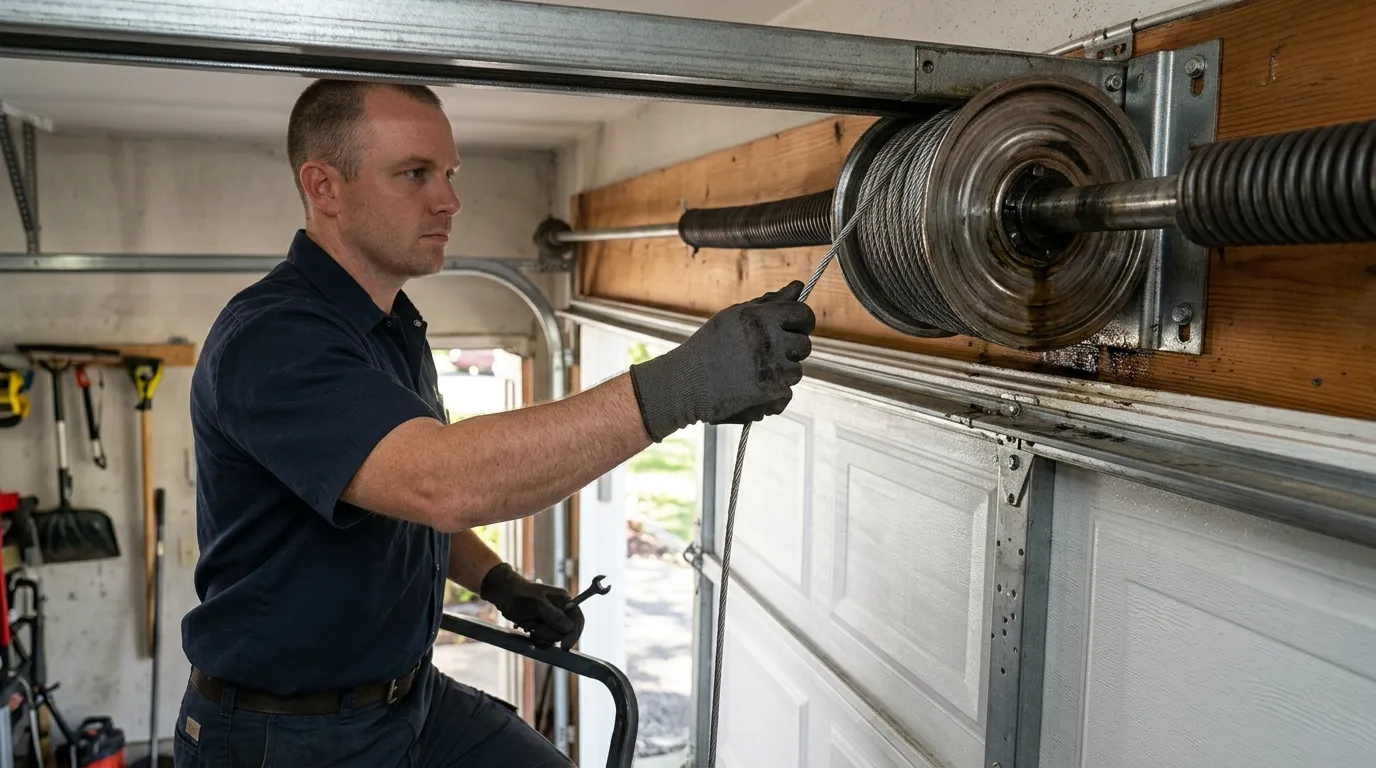
A real maintenance visit isn't a five-minute look and a squirt of oil. It starts with checking spring tension and counting cycles against the door's weight, since an undersized or fatigued spring is the single most common cause of a hard call-back. From there: inspect every hinge and roller for wear, check cable fraying at the drums, verify the track is plumb and not pulling away from the jamb, and torque down the lag bolts and brackets that loosen with years of vibration.
The opener gets tested for force and limit settings - too aggressive and it stresses the springs, too soft and it won't seat the door against weatherstripping. Lubrication matters more here than in a mild climate; the wrong grease gums up in the cold, so parts get a lubricant rated for it, not whatever's on the shelf. Weatherstripping and bottom seal get checked too, since a torn seal lets cold air and meltwater into the garage, which affects everything else on the door.
One honest limit: if a spring's already fatigued past a safe cycle count or a panel's rusted through, that's not a tune-up fix - it's a replacement conversation, and we'll say so rather than patch it and have it fail again in a month.
Why This Fails Locally
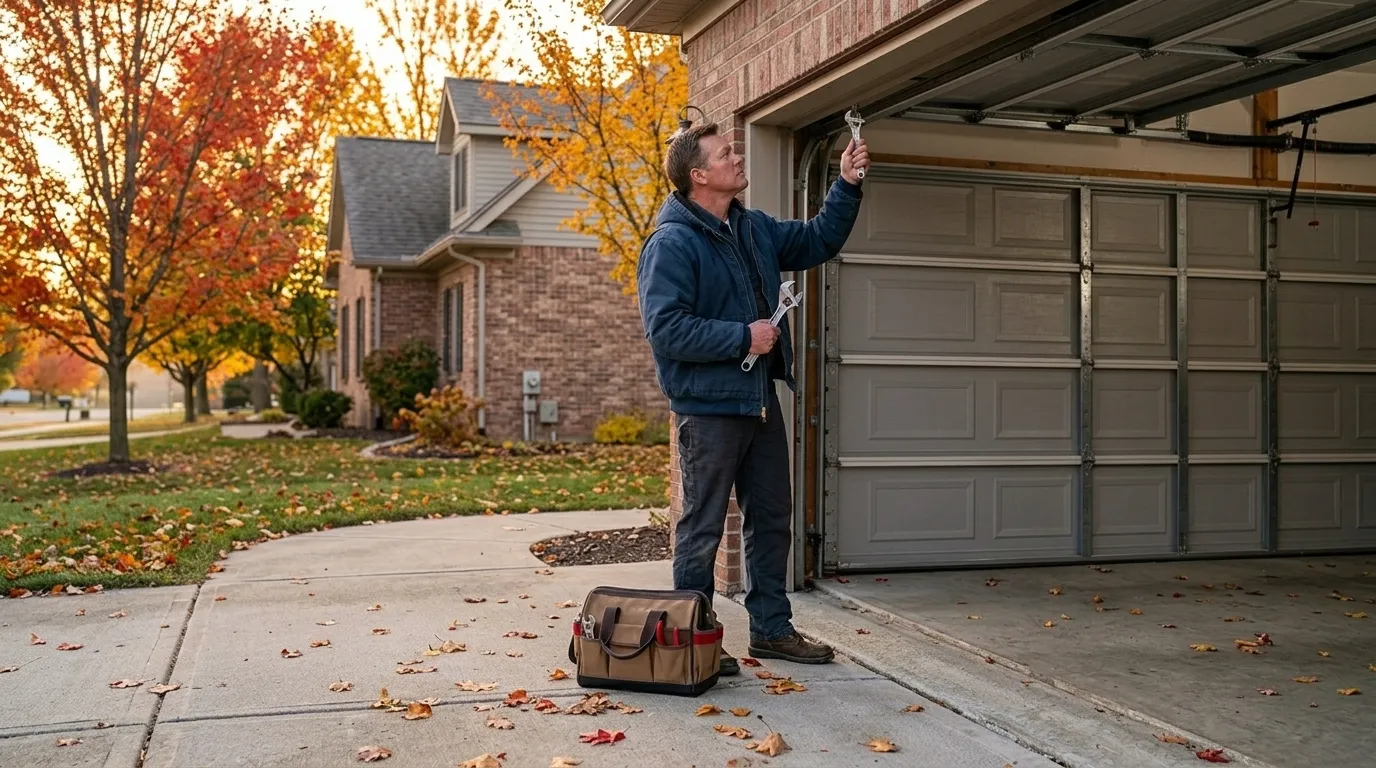
This is a severe cold climate, and steel contracts and grease stiffens well before the thermometer hits zero. Add to that a service area where the stock is mostly 1980s and 90s construction, repeated across all 31 named communities the company works - the same builders, similar door hardware, similar spring specs from an era before manufacturers rated components for today's colder averages and more freeze-thaw cycles per winter. That combination is why maintenance calls here cluster hard in late fall and after the first deep cold snap: hardware that's been quietly wearing all year finally meets a temperature swing it can't absorb.
With 48,649 owner-occupied houses in the service area, most of that stock is old enough that the original springs and hinges are past their rated cycle count, even if the door still looks and sounds fine on a warm day. A household here earns a median $100,179, which is enough to justify a maintenance call before a spring lets go and turns into an emergency replacement - the math favors catching wear early over paying for a weekend service call after a cable snaps.
The Symptom
It usually starts small. The door hesitates for a second before it moves, or it's noticeably heavier to lift by hand than it used to be. Mornings after a cold night, there's a grinding or popping sound from the spring area that wasn't there in summer.
Some owners notice the opener straining - the motor sounds like it's working harder, or the door stops a few inches from fully open and reverses. Others see it in the seal: a gap of daylight along the bottom edge where the weatherstripping has hardened and pulled away, letting in cold air that used to stay out. None of these on their own means the door is about to fail, but together, especially arriving with the first cold stretch of the season, they're the pattern that shows up right before a spring or cable actually lets go.
Catching it at the noise-and-stiffness stage, rather than the door-won't-move stage, is the difference between a maintenance visit and an emergency one.
Talk to a Technician Before You Book
Describe what the door is doing and get a straight answer on what it likely needs.
Jobs Like Yours
Recent work from this service line.
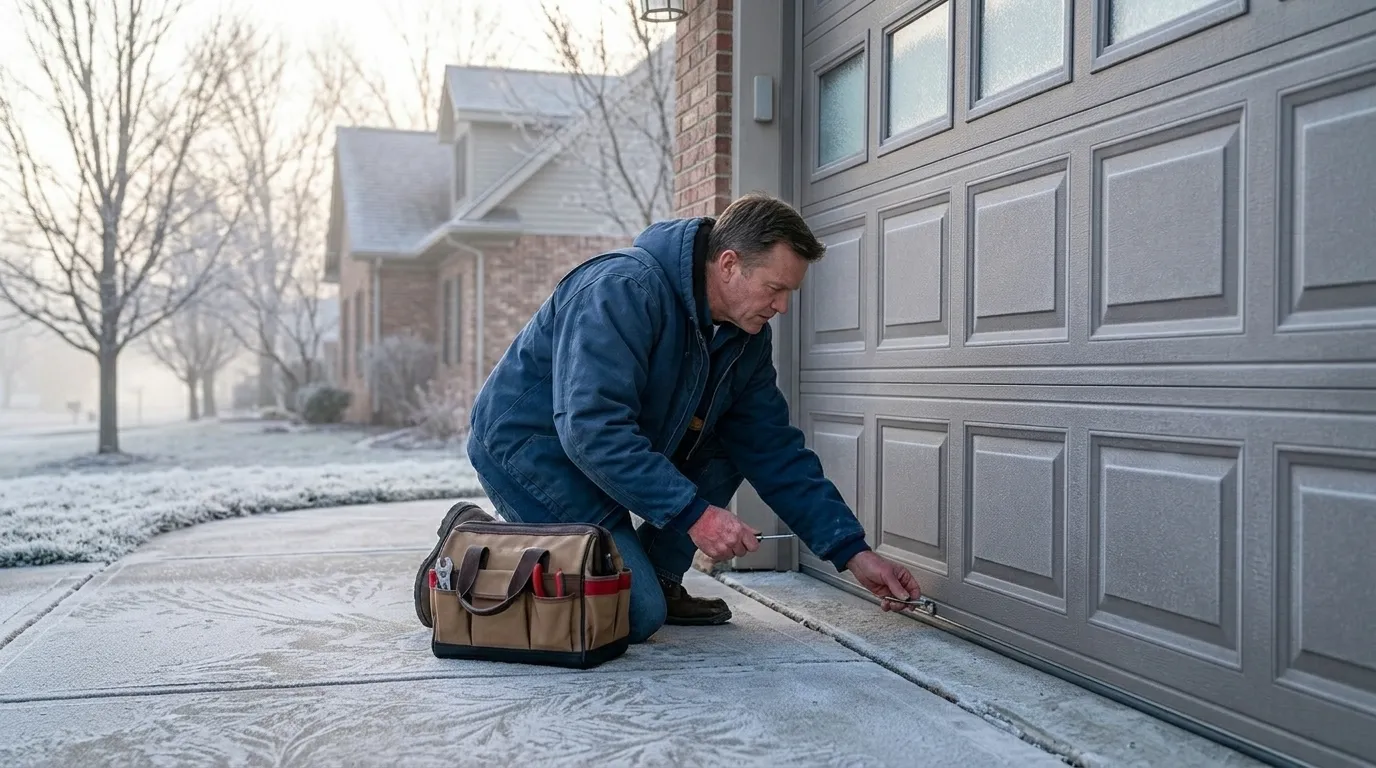
Why Forest Lake Calls Us
Frequently Asked Questions
How often does a garage door need maintenance in this area?
There's no single number that fits every door, since it depends on the door's age and how the opener's been set. What matters more here is timing: a check before the first hard freeze catches problems that a severe cold climate makes worse, before they turn into a stuck or broken door.
Can I just lubricate the door myself?
Lubrication helps, but it doesn't catch a fatigued spring, a cracked hinge, or cables fraying at the drum - the things that actually cause failures in this housing stock. A full check looks at tension, wear, and alignment, not just noise.
My door is original to a 1980s house - is that a problem?
Not automatically, but original hardware from that era wasn't rated for the cycle counts or cold-weather demands doors see now. If it's never been serviced, it's worth a look before it fails on a cold morning rather than after.
Is it ever better to replace than repair?
Yes. If a spring's badly fatigued or a panel's rusted through, patching it just delays the same failure. We'll tell you when a repair isn't worth doing instead of doing it anyway.
Need Garage Door Maintenance for Forest Lake's Cold-Climate Housing Stock?
Call now for straight answers on cost and timing.