Service
Emergency Garage Door Repair Serving Forest Lake and the Surrounding Area
Snapped spring, dead opener, or a door stuck half-open in cold weather. Forest Lake Garage Door Pros handles emergency repairs across the Forest Lake service area.
- Licensed & Insured
- Same-Area Service Calls
- Upfront Pricing
What Happens When You Call
-
1
Call or Request a Quote
Tell us what the door is doing and roughly how old the house is - that alone points us toward the likely part before a truck leaves.
-
2
On-Site Diagnosis
A tech checks the spring, cables, tracks, and opener in person and tells you plainly what is actually wrong.
-
3
Straight Price, No Surprises
You get a number before any work starts. It covers parts and labor, nothing added after the fact.
-
4
Fixed the Same Visit
Most repairs are done in one trip. If a part needs sourcing, we tell you that upfront instead of guessing.
What Can Go Wrong
A garage door fails in a handful of ways, and almost all of them show up worse in winter. A torsion spring snaps under tension and the door goes dead weight - you can't lift it by hand and the opener strains and stalls. A cable frays and jumps the drum, which lets one side of the door drop while the other stays up, racking the panels.
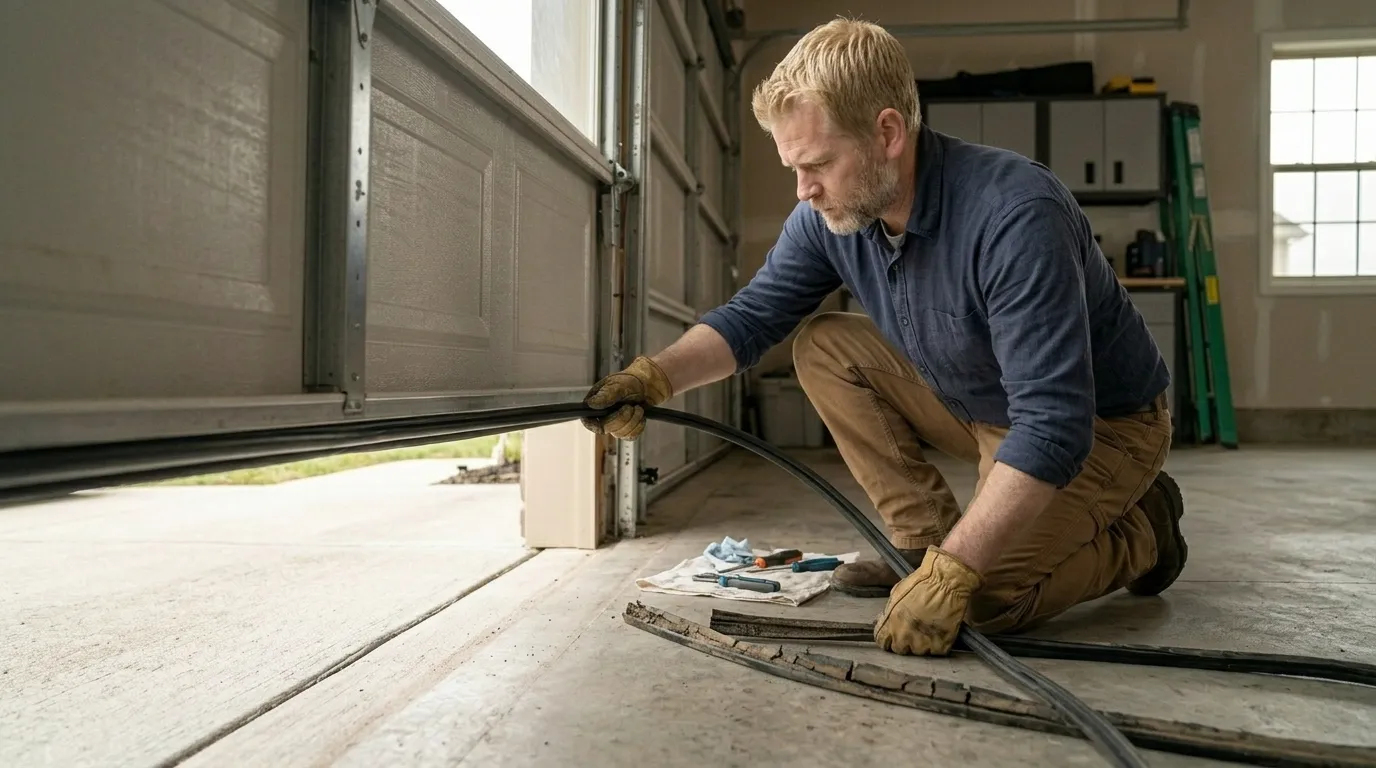
Rollers dry out and bind in the track, especially on doors that haven't been serviced since they were installed. Openers burn out a gear or a circuit board, often the same week a cold snap hits and the motor has to work harder to break ice loose from the bottom seal. On older sectional doors, hinges crack at the panel edge after enough freeze-thaw cycles.
None of this is exotic. It's what happens to moving steel parts, lubricated grease, and a motor rated for a certain load when the temperature swings hard and the door's been doing the same job for two or three decades without anyone touching the hardware. The failure mode is almost always mechanical fatigue meeting cold - not a manufacturing defect, just time and weather doing what they do.
What the Fix Involves
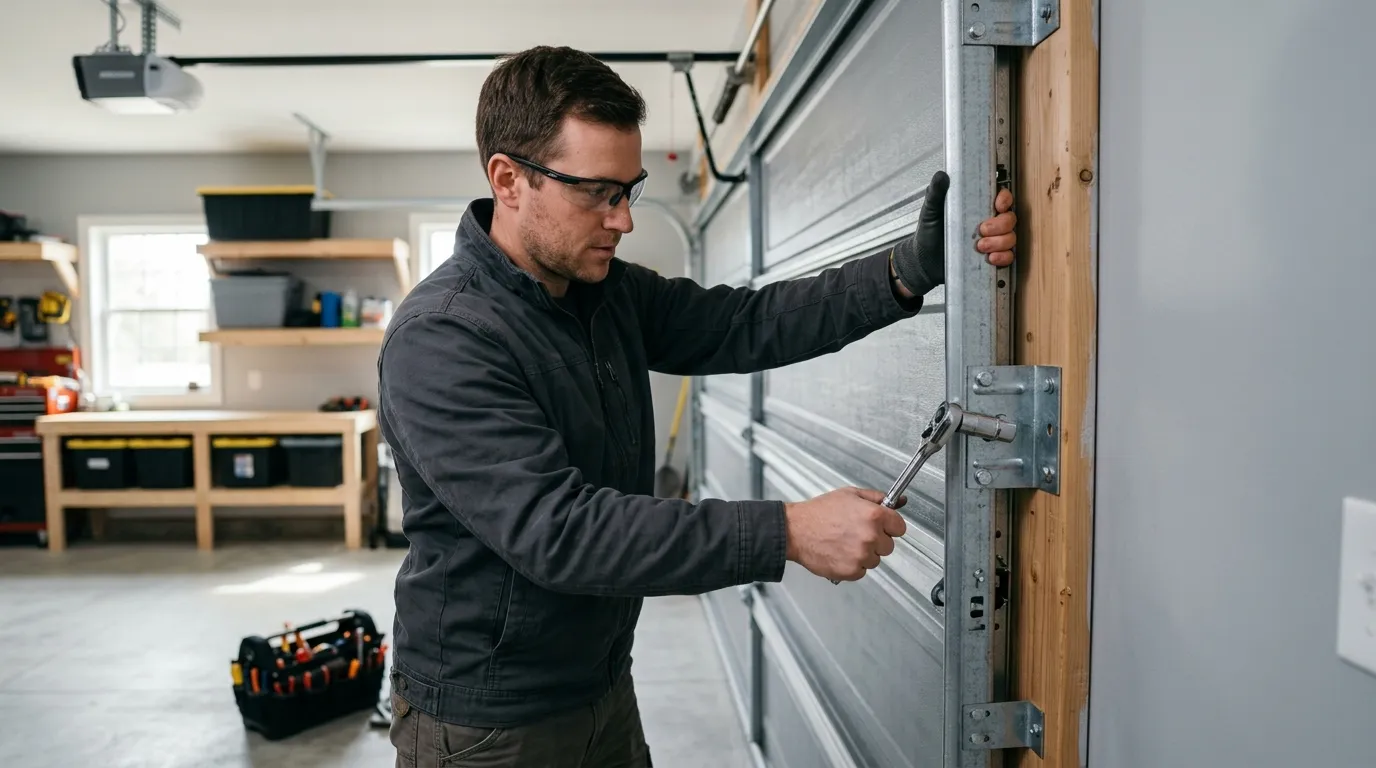
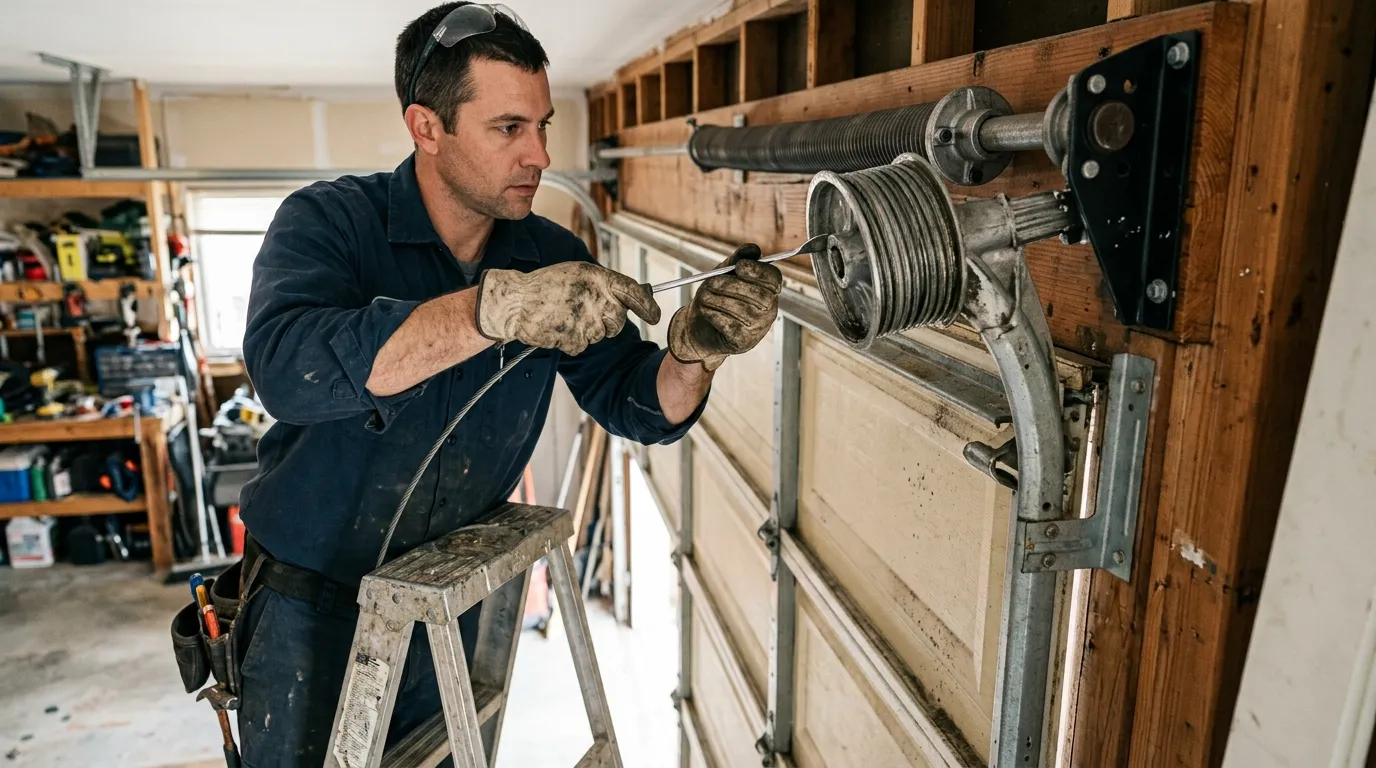
First step is always diagnosis on site, not over the phone - a dead opener can mean a burnt board, a snapped spring the opener can't overcome, or a sensor knocked out of alignment, and those three fixes look nothing alike. If it's a torsion spring, that means winding down the old one safely, matching wire size and wind direction to the door's weight, and setting the new spring with a winding bar - not a job to guess at, and not one we'd recommend a homeowner do alone. A snapped cable means replacing both cables as a pair, even if only one broke, since the other is the same age and under the same load.
Opener repair covers logic boards, capacitors, and drive gears where the part is available; when the opener is old enough that the manufacturer's stopped making the board, replacement is the honest answer, not a patched fix that fails again in a month. Track and roller work is realignment and lubrication, sometimes new rollers if the old ones are chipped. One limitation worth saying plainly: on some older extension-spring setups from the 1980s and 90s, exact replacement hardware isn't something we carry on the truck, and that part may need a short order-in wait.
Why This Fails Locally
Housing across this service area was mostly built between 1950 and 2002, with a median construction year around 1984, and most of the 31 communities we cover fall into that 1980s-to-90s stock. That matters because a door and opener installed when a house was built is now 25 to 45 years old on original hardware in a lot of cases, and springs, cables, and openers all have a service life measured in cycles, not decades. Add a climate band that sits on the severe end of cold, and you get a specific pattern: steel contracts, grease thickens, seals stiffen, and a spring that's already fatigued from thirty years of cycles is the one that finally lets go on the coldest morning of the month.
This isn't a Forest Lake quirk alone - it's the same pattern across Wyoming, Scandia, Columbus, Chisago City, Centerville, and the rest of the towns within roughly 20 miles that share this same era of housing and the same winters. Newer subdivisions with post-2000 doors see fewer of these calls; the older stock carries almost all of it.
The Symptom
What you notice first tells you a lot about what's actually broken. A door that won't budge, with the opener humming but the door not moving, usually means a broken spring - the opener physically can't lift dead weight alone. A door that opens partway then reverses or drops back down is often a misaligned safety sensor or a spring that's weak rather than fully broken.
A loud bang from the garage, followed by the door refusing to move, is almost always a spring snapping under tension - it's a hard sound to mistake once you've heard it. A door that runs crooked, with one side higher than the other, points to a broken or frayed cable. Grinding or squealing from the track, without the door binding yet, is rollers on their way out before they fail completely.
And a door that's fine manually but the opener does nothing at all - no light, no hum - is an electrical or board issue in the opener itself rather than the door mechanism. Matching the symptom to the fault before a truck rolls out saves a diagnostic visit that doesn't need to happen.
Talk to a Technician Before You Book
Describe what the door is doing and get a straight answer on what it likely needs.
Jobs Like Yours
Recent work from this service line.
Why Forest Lake Calls Us
Frequently Asked Questions
Why did my garage door spring break in the middle of winter?
Cold makes steel less flexible and grease inside the coil thicker, so a spring that's already worn from years of cycling has less give right when it needs it most. In this area's cold-climate band, that combination is the single biggest reason spring failures cluster in the coldest weeks rather than spreading evenly across the year.
Is my opener too old to repair?
Sometimes. If the board or motor is still made or has an equivalent part, repair usually makes sense. If the manufacturer's stopped supporting that model, which happens with openers installed when a lot of this area's housing went up in the 1980s and 90s, replacement ends up being the more honest fix than patching a board that'll fail again soon.
Do you carry every spring size on the truck?
No. Most common torsion sizes, yes. Some older extension-spring setups from houses built decades ago use hardware we don't stock on every truck, and that part can take a short order-in wait. We'll tell you on site if that's the situation rather than guessing.
How do I know if it's the spring or the opener?
If the opener motor runs but the door doesn't move, or barely creeps, that's almost always a spring problem - the opener isn't built to lift a door's full dead weight alone. If the opener does nothing at all, no light or sound, that points to an electrical fault in the opener itself.
Need Emergency Garage Door Repair Serving Forest Lake and the Surrounding Area?
Call now for straight answers on cost and timing.