
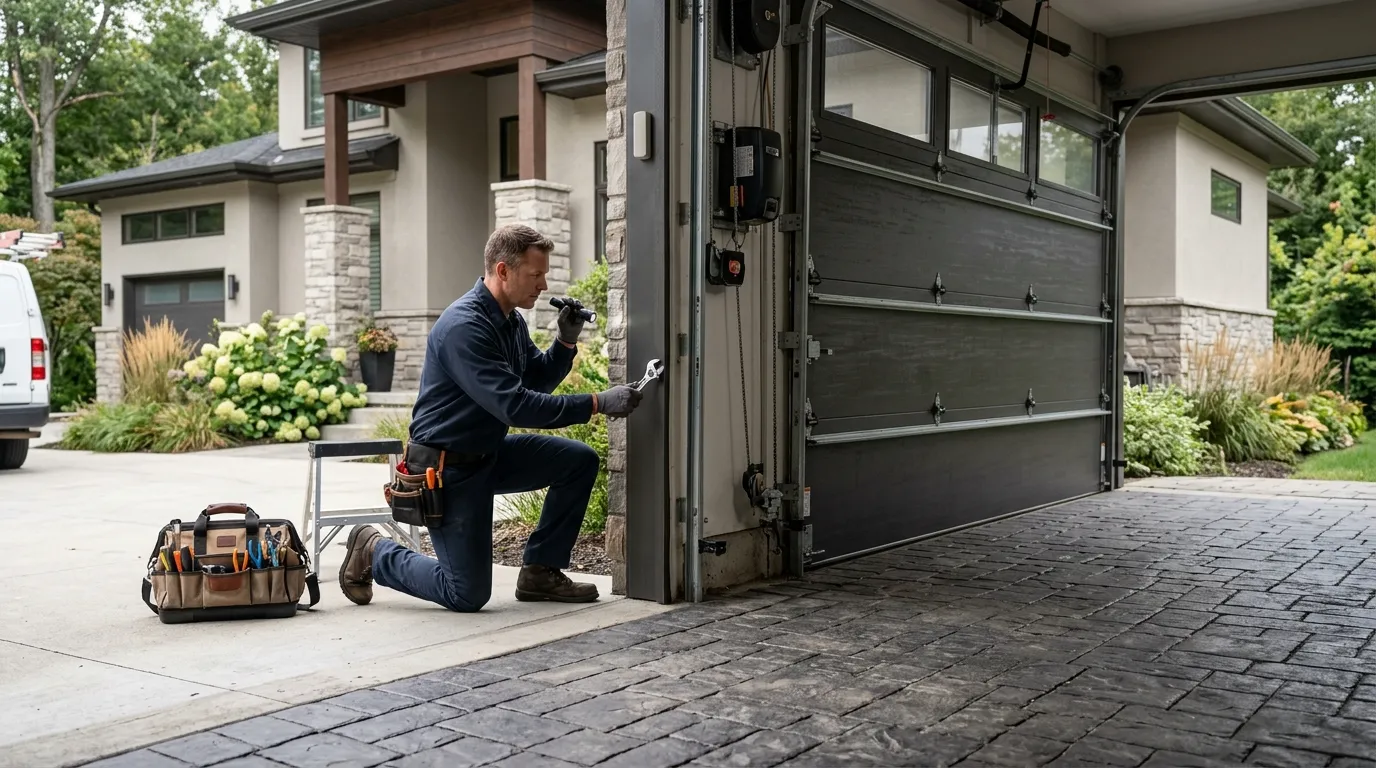
Maintenance & Tune-Up in Chisago City
Garage Door Maintenance for Chisago City Homes
Garage door maintenance for Chisago City's late-1980s steel doors, serviced from Forest Lake 7 miles away, built for Minnesota's cold winters.
- Licensed & Insured
- Same-Area Service Calls
- Upfront Pricing
What Happens When You Call
-
1
Call or Request a Quote
Tell us what the door is doing and roughly how old the house is - that alone points us toward the likely part before a truck leaves.
-
2
On-Site Diagnosis
A tech checks the spring, cables, tracks, and opener in person and tells you plainly what is actually wrong.
-
3
Straight Price, No Surprises
You get a number before any work starts. It covers parts and labor, nothing added after the fact.
-
4
Fixed the Same Visit
Most repairs are done in one trip. If a part needs sourcing, we tell you that upfront instead of guessing.
Doing It Yourself
Most garage doors in Chisago City went up around 1989, and that tells you exactly what's hanging in the opening: a steel sectional door, usually two-car width, on steel rollers with a torsion spring sized for a builder-grade panel weight, not the heavier insulated doors that came later. That's the door before anything's gone wrong with it.
Owners can do real maintenance on a door like this. Wipe the tracks clean, check that the rollers spin freely instead of dragging, and look at the bottom weatherstrip for cracking - it's original vinyl on a lot of these doors and it hardens with age. You can also test the auto-reverse safety feature by setting a 2x4 flat under the door and running it down; it should reverse on contact every time.
What you shouldn't touch: the torsion spring itself. It's wound under enough tension to break bones if the winding cone slips, and a 1989-era spring has had thirty-five years to fatigue. That part of the job belongs to someone who does it for a living, not a Saturday project.
Why This Fails Locally
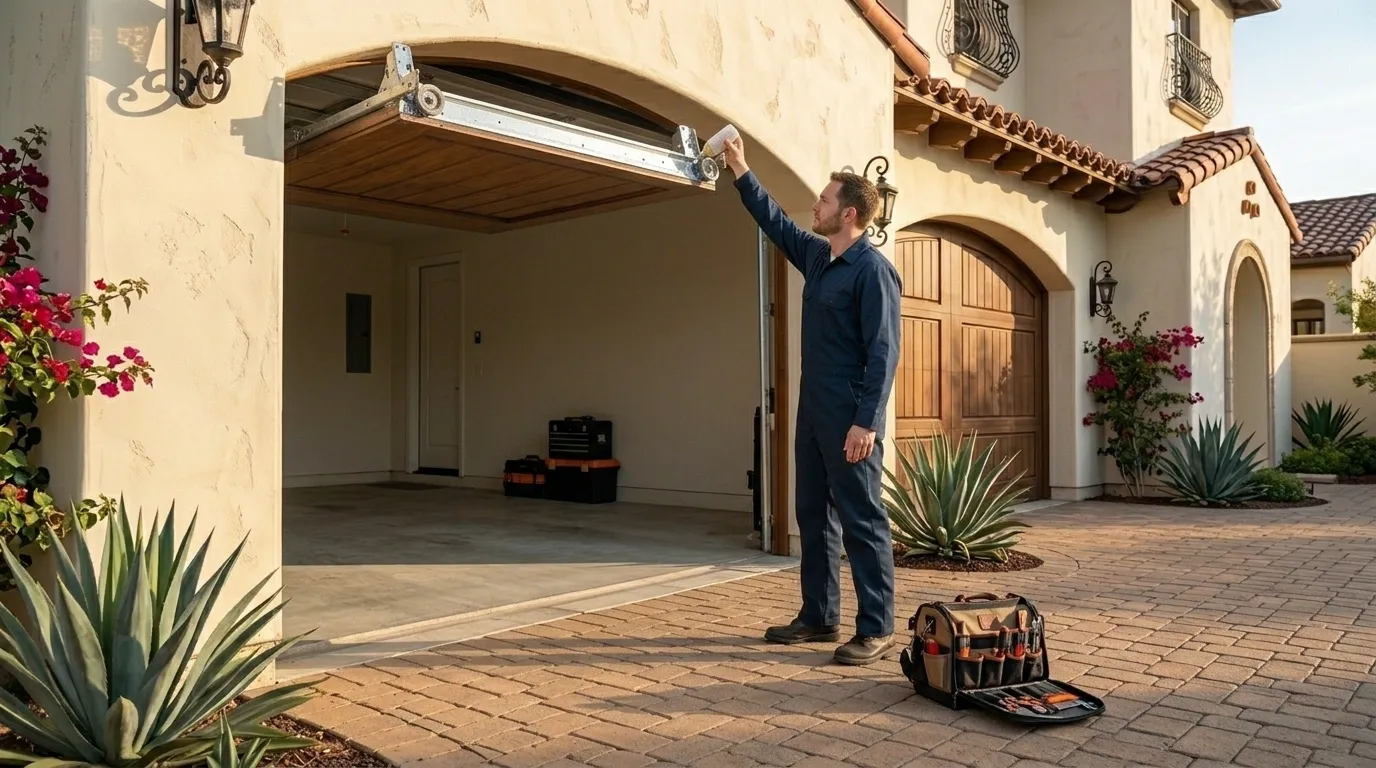
A door built for this stretch of the late 1980s wasn't engineered with today's insulation standards or hardware tolerances. The steel gauge is thinner than what's sold now, and the torsion spring was matched to a lighter, uninsulated panel. Owners who add a heavier insulated door later, or bolt on a keypad and a stronger opener, are now running mismatched hardware against an original spring - and that spring doesn't know the difference until it snaps.
The other factor is the cold. This area sits in a severe cold-climate band, and repeated freeze-thaw cycles stiffen lubricant on tracks and rollers, shrink weatherstrip gaps, and put extra load on a spring that's already working harder in low temperatures than it did when it was new. A door that's coasted along fine for two decades can start failing in its third winter of real cold stress, not because anything broke suddenly, but because thirty-five years of small wear finally adds up in January.
None of this shows up if maintenance is only ever reactive - called out after something already broke.
What Can Go Wrong
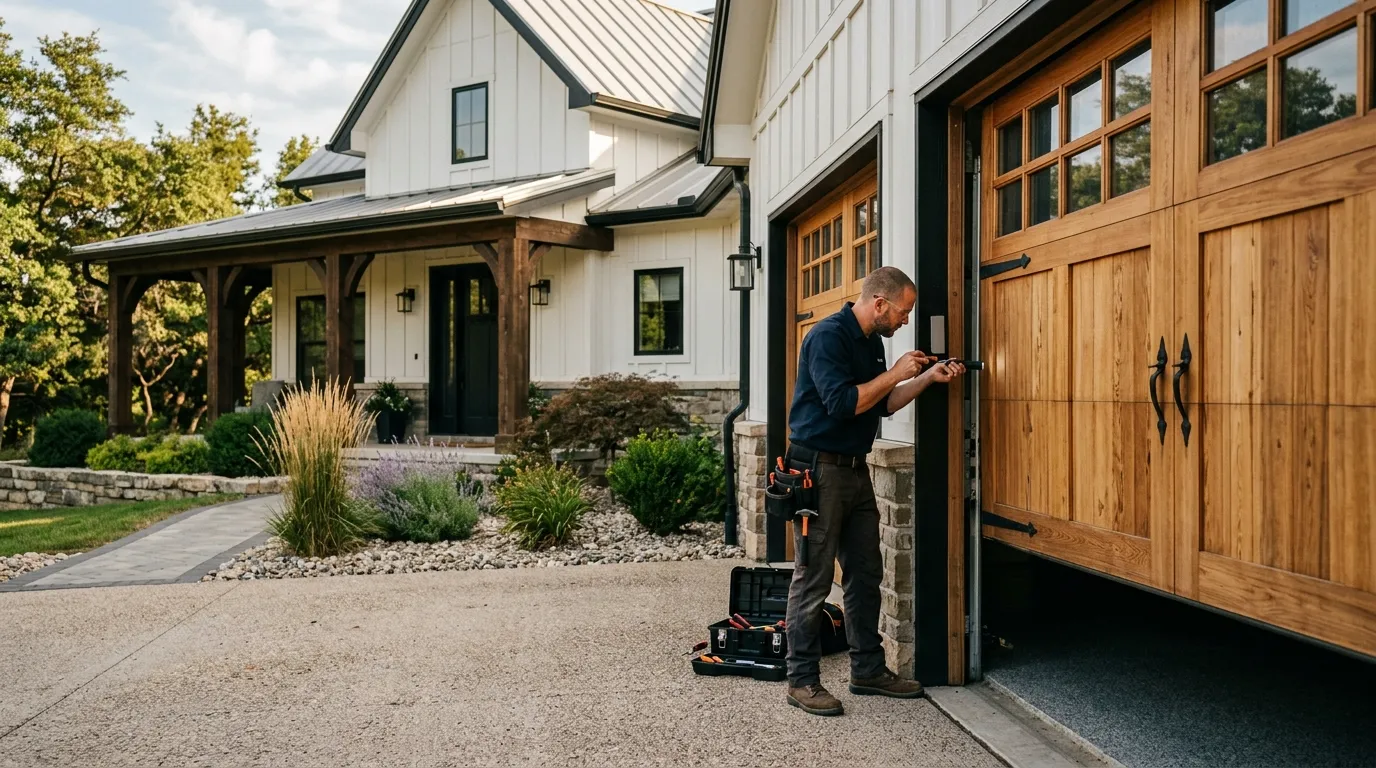
On a door this age, the failure points are predictable. The torsion spring loses tension unevenly, so the door starts to hang crooked or drop fast on the way down.
Rollers wear oval instead of round and start binding in the track, which shows up as a grinding or slapping sound. The bottom seal cracks and lets cold air and meltwater under the door, which is its own problem in a severe cold climate - wet wood or steel jambs at the base don't dry out fast in a Minnesota winter.
Cables fray where they wrap the drum, usually invisible until one strand lets go and the door tips. Opener gears made of nylon, common in units from this era's replacement cycle, wear down and slip without warning.
One limitation worth saying plainly: if the door itself is original steel from the late 1980s and the spring, rollers, and opener are all near end of life at once, patching each part separately usually costs more over a year than replacing the door. Maintenance extends a door's life - it doesn't reset the clock on one this old.
What You Pay
We don't have a fixed maintenance price to quote here, and giving one without knowing the door's condition would be a guess, not a number you can trust. What we can tell you is what drives the cost: how many moving parts need lubrication and adjustment versus how many need replacement, and whether the trip out covers one door or a full inspection of springs, cables, rollers, and opener together.
Chisago City sits about seven miles from our Forest Lake location, which is a short trip and doesn't add a separate travel charge to the job. The area's median household income runs close to $96,964, and most of the roughly 2,236 households here are still running the same door and opener the house came with. That's a lot of original 1980s-90s hardware still in service, which is exactly the kind of stock that benefits from a maintenance visit before a part fails outright rather than after.
What the Fix Involves
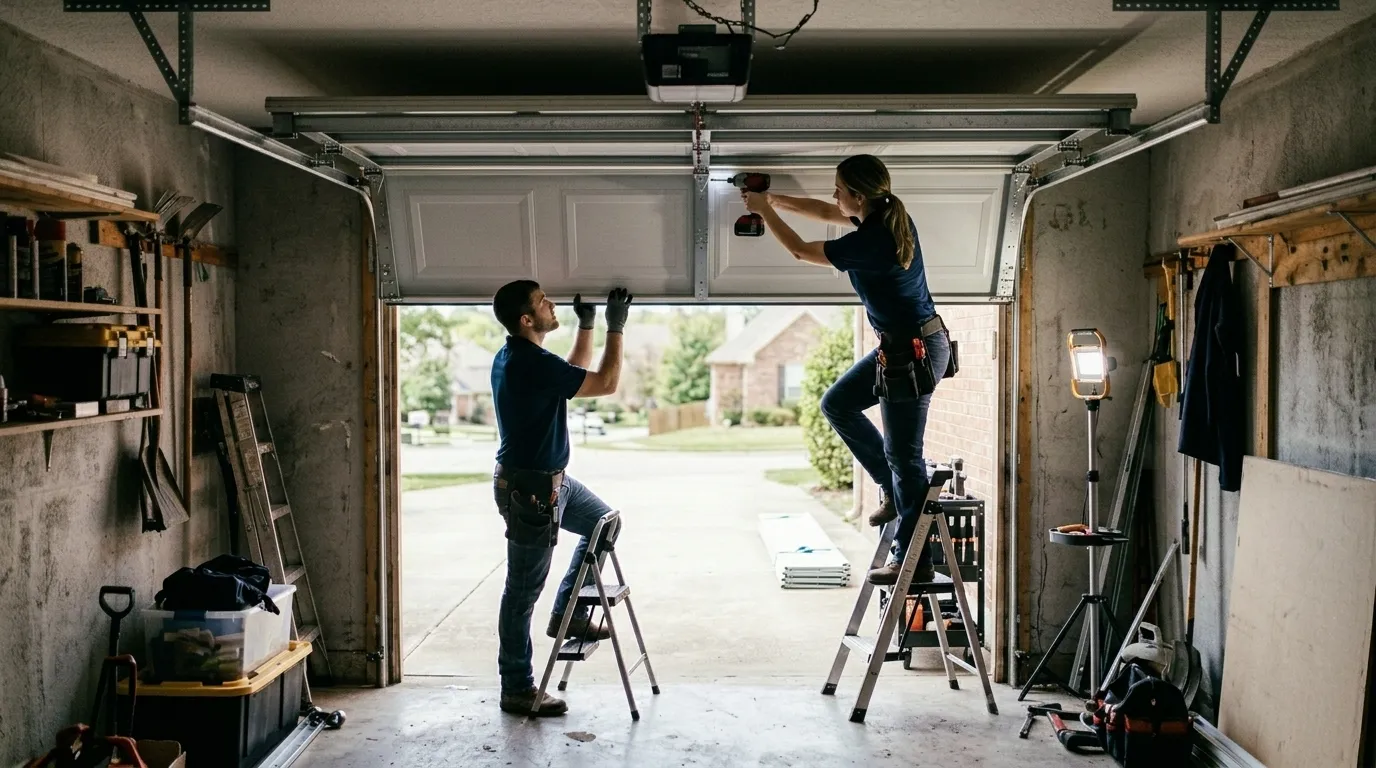
A real maintenance visit on a door from this era starts with the spring - checking tension, looking for rust pitting or uneven coil wear, and confirming the cable drums are seated right. Rollers get inspected and replaced if they're worn oval; nylon rollers on a thirty-plus-year-old door are usually due regardless of noise level. Track alignment gets checked with a level, not just eyeballed, since a slightly bent track is a common cause of a door that binds only in cold weather.
We also check the bottom seal and weatherstripping, since a cracked seal on a house built in this range is normally original and overdue. The opener gets a look at the gear, the safety reversal sensors, and the force setting - a force set too high compensates for a stiff track instead of fixing it, which just wears the opener motor faster.
For details on the areas we cover out of Forest Lake, see our coverage page, and for the full maintenance service description, see the Forest Lake maintenance page.
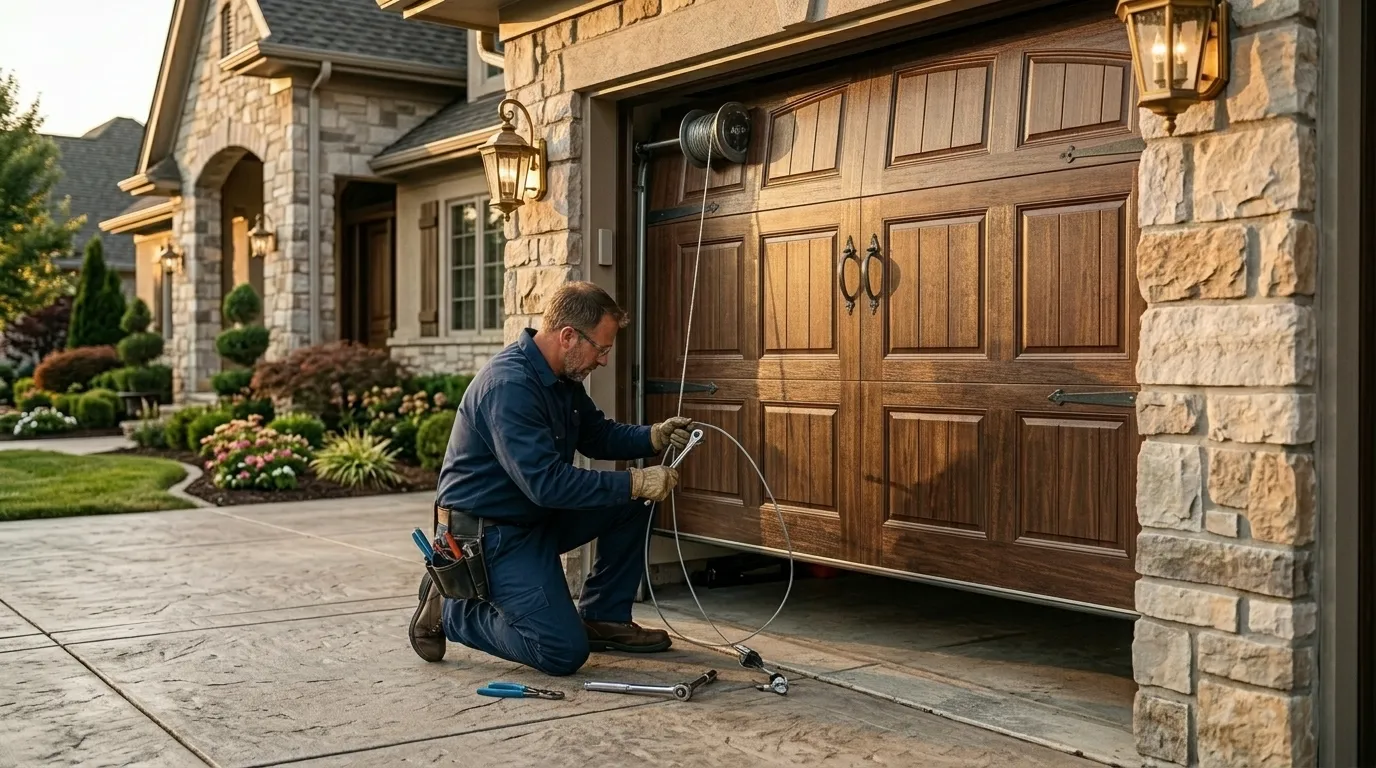
Talk to a Chisago City Technician First
Describe what the door is doing and get a straight answer on what it likely needs.
Other Garage Door Services in Chisago City
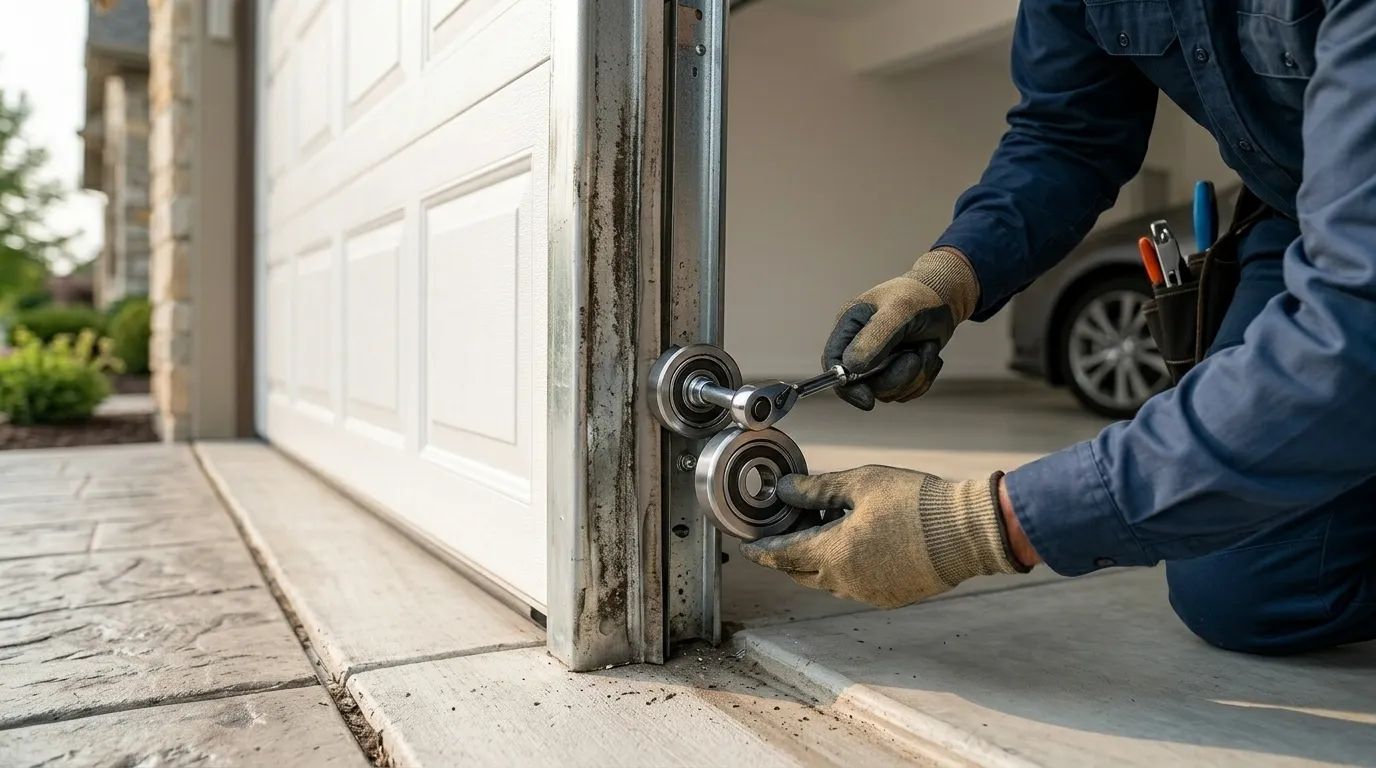
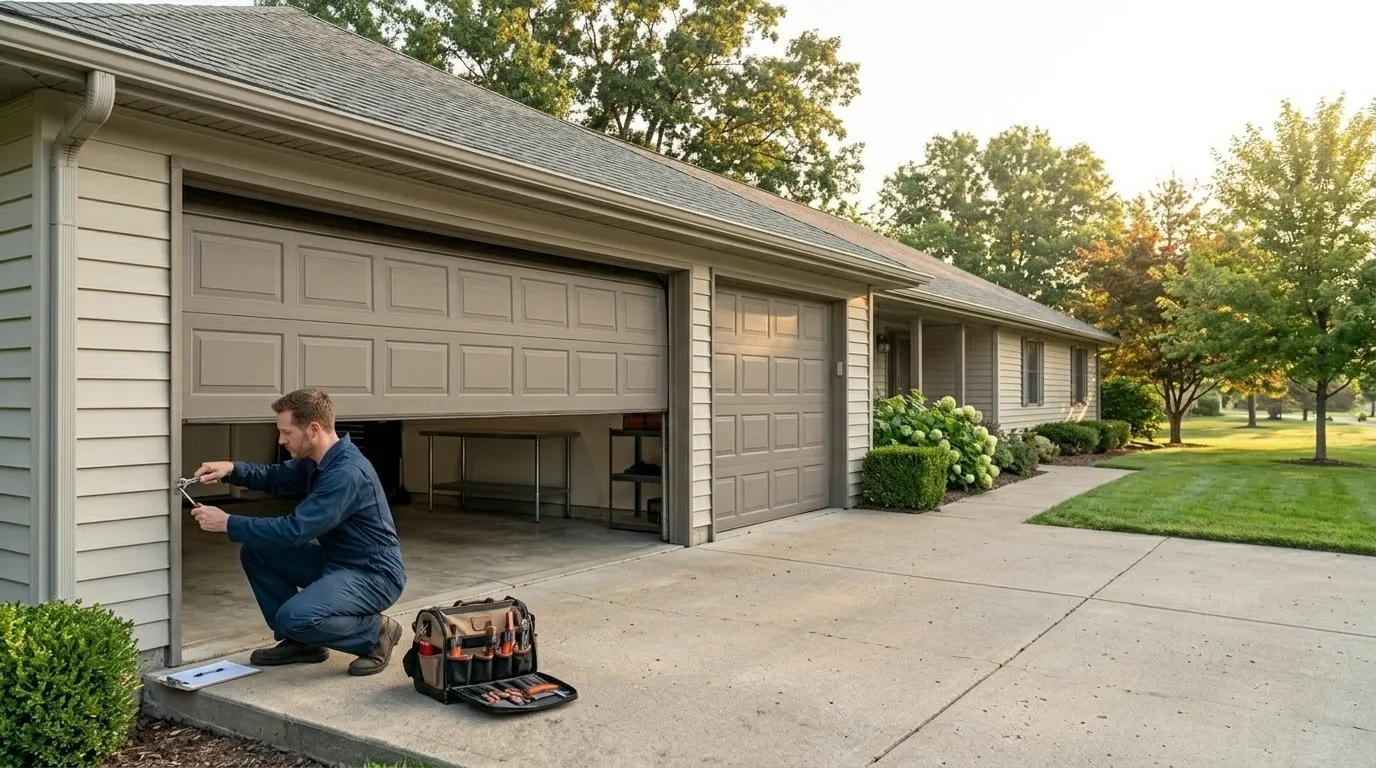
Recent Work in Chisago City
A look at jobs our crew has been on nearby.

Why Chisago City Calls Us
Frequently Asked Questions
How often should a garage door this age get serviced?
For a door built around 1989, once a year is reasonable if nothing's acting up, twice a year if you've noticed any grinding, dragging, or uneven closing. Cold-climate stress on old hardware tends to show up gradually, so an annual check catches wear before it becomes a broken spring or a cable failure.
Is my original spring still safe to run?
A torsion spring from the late 1980s has had decades of cycles and cold-weather stress, so age alone is a reason to have it inspected rather than assumed fine. We can't give you a safe-or-not answer without seeing it - uneven gaps in the coil or visible rust pitting are the signs that push it toward replacement.
Do you have a branch in Chisago City?
No, we run out of Forest Lake and travel to Chisago City for maintenance visits, about seven miles each way. There's no separate depot here, just the same crew and truck coming out to do the job.
Will maintenance fix a door that's dropping unevenly?
Sometimes - if it's rollers binding or a track slightly out of alignment, a maintenance visit can correct it. If it's uneven spring tension from age, that's a spring adjustment or replacement, which is still part of a standard service call but goes beyond basic lubrication and cleaning.
Need Maintenance & Tune-Up in Chisago City?
Call now for straight answers on cost and timing.